Transparent Supply. Responsible Catch. Traceable Seafood
Driven by our core mission of protecting our oceans, the Indonesia Tuna Longline Association (ATLI) actively leads the Fishery Improvement Project (FIP) to elevate Indonesian tuna fisheries to global standards. This dedicated platform provides the latest information, transparent data, and updates about the Fishery Improvement Project (FIP) initiatives. We firmly believe that securing the future of responsible catch requires continuous innovation and shared accountability. We welcome collaboration, insights, and partnerships from global stakeholders to strengthen our impact on the water.
Launched in November 2019, the Indonesia Tuna Longline Fisheries Improvement Project (FIP) is a collaborative initiative by Indonesia Tuna Longline Association (ATLI) and industry partners. Today, this alliance unites vessel operators and processing units under a shared commitment to drive long-term sustainable fisheries practices.
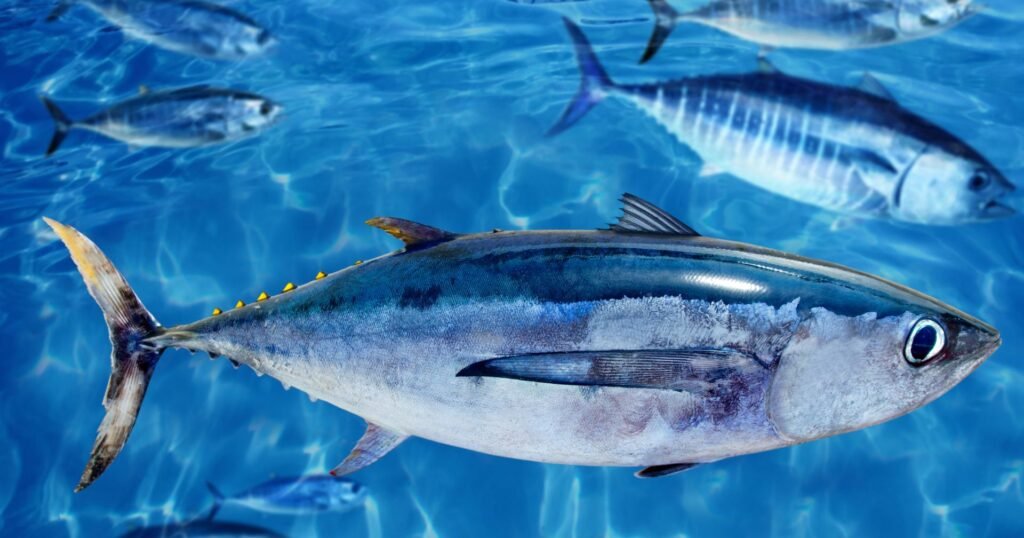
Operating across Indonesia’s Exclusive Economic Zone and the Indian Ocean High Seas, the FIP ensures responsible harvesting of four key species: Yellowfin Tuna, Bigeye Tuna, Albacore, and Swordfish. All operations strictly comply with regulations set by the Indonesian Government (Ministry of Marine Affairs and Fisheries) and the Indian Ocean Tuna Commission (IOTC).
By 2028, the FIP will integrate comprehensive social responsibility standards for fishers’ welfare. To maintain global credibility, all progress is transparently tracked on FisheryProgress.org, guiding the alliance toward full Marine Stewardship Council (MSC) Certification by 2029.

FIP framework was established with 17 founding partners, which has now matured into a robust alliance of 38 active vessel operators and processing units. This phase focused on establishing data baselines, scaling up Electronic Logbook (e-Logbook) adoption, and initiating on-the-water training.
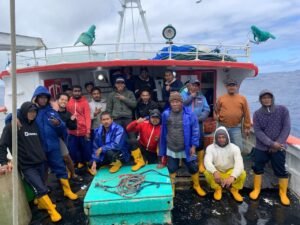
By 2027, fishers’ basic rights and responsibilities are fully incorporated into FIP communication, outreach, and annual implementation processes across the alliance network.
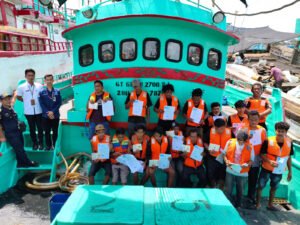
By 2028, comprehensive social responsibility considerations are systematically integrated into FIP planning through internal compliance processes, ensuring fair labor practices on all vessels.
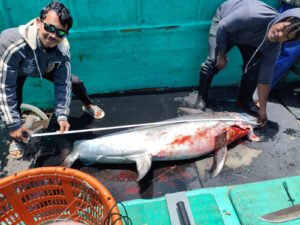
By 2029, onboard observer coverage will exceed 20%, supported by strengthened coordination with fishing vessel operators to ensure consistent monitoring across the fleet. Concurrently, full Marine Stewardship Council (MSC) certification is achieved through these strengthened environmental performance improvements.
Achieving long-term sustainability requires multi-stakeholder collaboration. We proudly work alongside industry leaders, government agencies, NGOs, and other institutions who share the same vision.